When we picture migrations in North America, often we think of songbirds heading south for the winter. But there are lots of other animals that make seasonal treks on a large scale. Read on to discover some of nature’s most amazing phenomena.
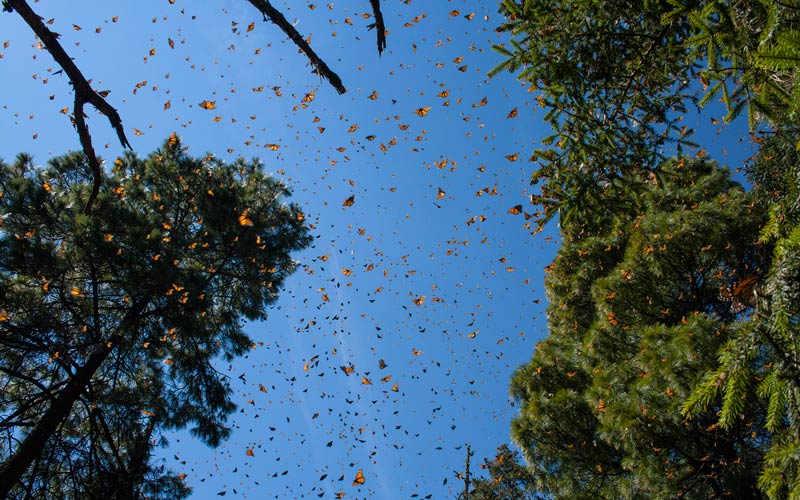
Monarch butterfly (Danaus plexippus)
When and where: Starting in September and October, monarchs begin the journey southward from their breeding grounds in the U.S. and Canada east of the Rocky Mountains to about a dozen isolated sites in Mexico’s Sierra Madre Mountains. They begin the return trip in March.
How many: From hundreds of millions up to more than 1 billion individuals (though loss of habitat and food source due to climate change and pesticide use threaten these numbers)
How far: The southward migration can be up to 2,500 miles total. One butterfly was recorded to have traveled 265 miles in one day!
Did you know? The southward trip is made by a single generation; the northward trip is completed by multiple generations who live, breed, and die along the way.
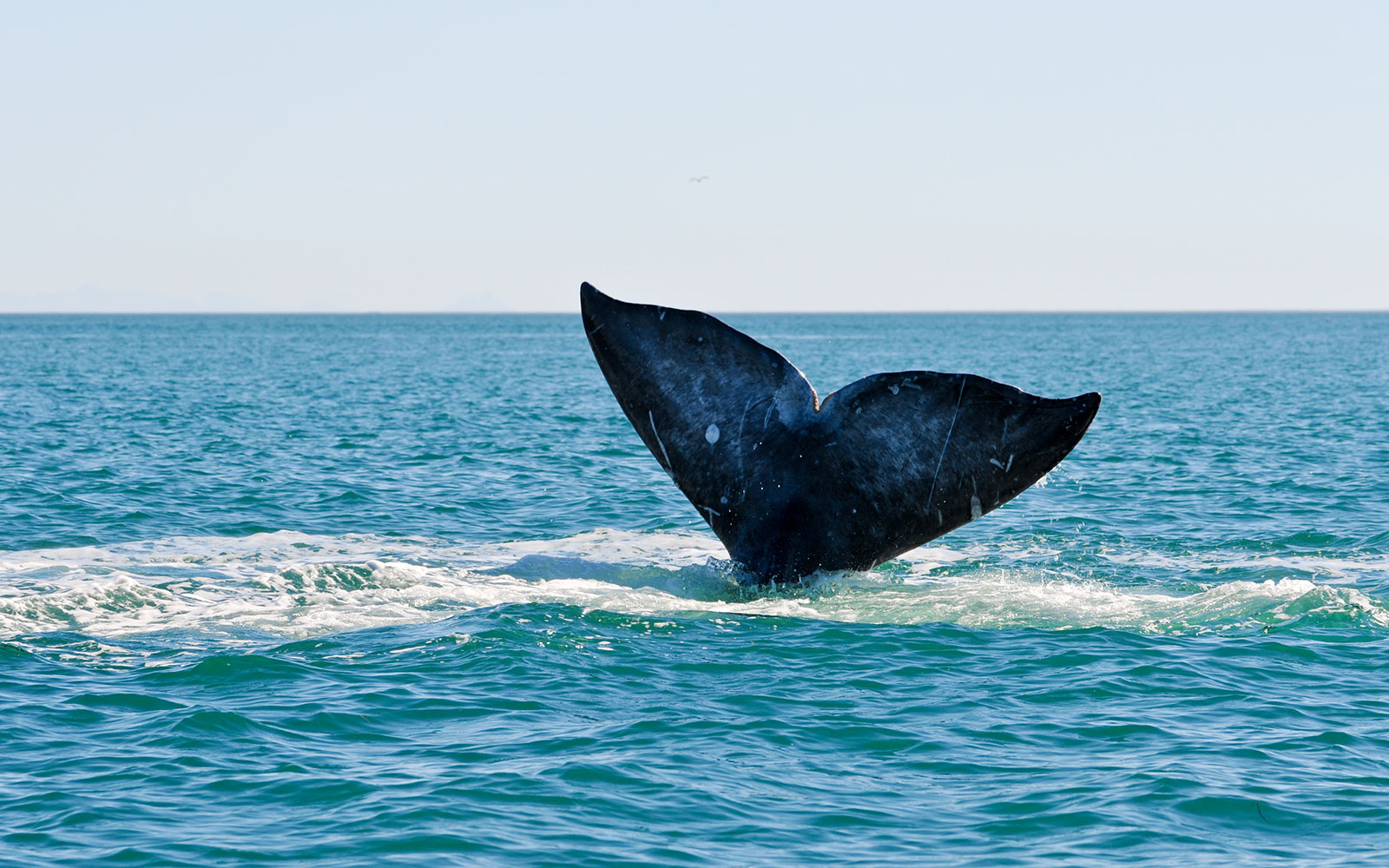
Gray whale (Eschrichtius robustus)
When and where: Each year around September/October, gray whales from the species' eastern North Pacific population begin their journey south from the Arctic Ocean to the warm waters of Baja California’s lagoons, where they court, mate, give birth, and care for their young before returning north from mid-February to May.
How many: A population decline from 2019 to 2023 puts the current estimate at about 13,000 individuals.
How far: Gray whales make a round-trip journey of approximately 10,000 to 12,000 miles — and in some instances more than 14,000 miles.
Did you know? Gray whales have a gestation period of 12 to 13 months. Newborn gray whale calves are about 14 to 16 feet long and weigh about 2,000 pounds.

Ruby-throated Hummingbird (Archilochus colubris)
When and where: Most Ruby-throated Hummingbirds spend the North American winter in Mexico and Central America. They begin migrating south in August and September, and from March to May they make the return trip to the eastern and central U.S. and southern Canada, where they breed.
How far? Approximately 2,500 miles one-way
Did you know? These hummingbirds can travel at an average rate of 25 mph. To cross the Gulf of Mexico, it takes about 20 hours non-stop — an amazing feat, given the bird’s small size!

Wildebeest (Connochaetes taurinus)
When and where: Each year in Tanzania and Kenya, wildebeest and other grazing animals like zebras, gazelles, and impala migrate in a loop according to the wet and dry seasons, in search of food, water, and safe breeding and calving grounds.
How many: More than 1.5 million wildebeest plus zebras, gazelles, and impala; it's considered to be the largest and longest overland animal migration.
How far: About 1,000 miles round-trip
Did you know? In addition to predators like crocodiles and lions, throughout their migration cycle, wildebeest face the threats of drowning while crossing rivers, starvation, and thirst.
 Photo by James Cornwell
Green sea turtle (Chelonia mydas)
When and where: Green sea turtles are found all over the world in temperate and tropical waters, usually near the coastline protected bays. They migrate from their feeding grounds to nesting beaches. The breeding season takes place in late spring and early summer, and females lay their eggs a few weeks after mating.
How far: Hundreds or sometimes thousands of miles
Did you know? Year after year, female turtles return to the same beach on which they were born to nest.
Sources: Operation RubyThroat; Dr. Thomas C. Emmel; Florida Museum of Natural History; USDA Forest Service; Lucas Mhina; Sea Turtle Conservancy; National Wildlife Federation; NOAA Fisheries
Originally published October 2016; updated February 2026